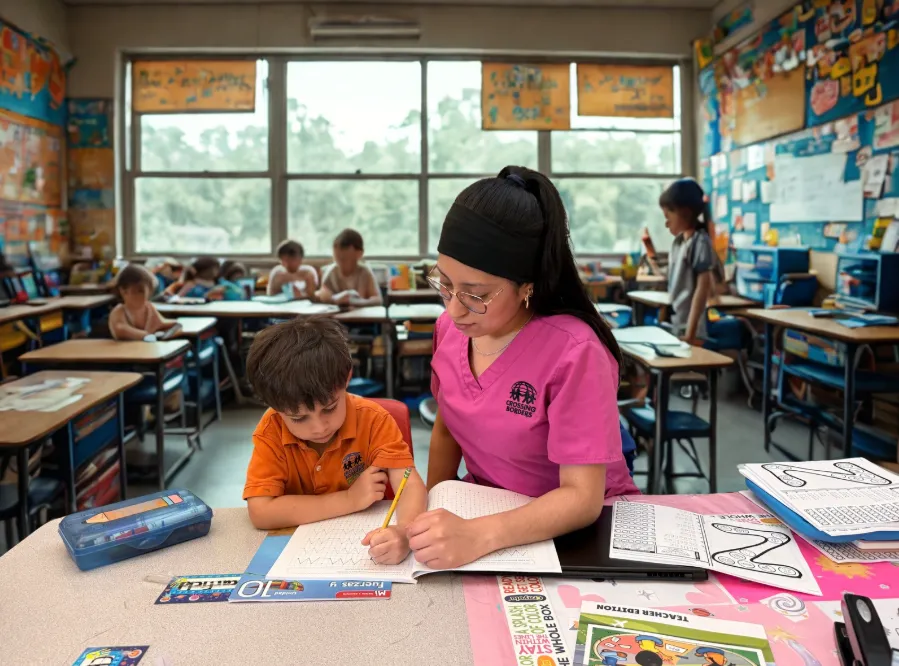
What Age Should My Child Start Language Immersion?
What Age Should My Child Start Language Immersion?
If you are a parent mapping out your child’s educational future or interested in early childhood learning for elite results, you likely would want to know: What age should my child start language immersion? Should you wait until they have firmly mastered English, or should you invest in early language acquisition from day one?
After 26 years of building early childhood language frameworks and monitoring the progress of thousands of infants, toddlers, and preschoolers, the answer from the field is clear. The optimal time to start true language immersion is between birth and age five, with the preschool years serving as the absolute sweet spot for structured immersion. When you look at the data and the brain mechanics, delaying language education until elementary school means missing the most effortless learning window a human will ever have.
The Science of the Early Childhood Window
To understand why the early childhood years are the premier time for immersion, we have to look at the biology of the developing brain. During the first five years of life, a child's brain is uniquely hardwired for language assimilation.
According to the San Diego Family Magazine, young children do not process language through the analytical, left-brain structures that adults use. Instead, they use the same neural pathways responsible for deep, unconscious habits like learning how to walk.
Starting immersion during the early childhood years offers distinct neurological advantages:
Flexible Auditory Processing: Up until around age seven or eight, a child’s ear and speech muscles can easily detect and mimic subtle phonetic variations. This allows them to achieve native-like pronunciation without a heavy foreign accent as mentioned in the San Diego Family Magazine.
Contextual Absorption: Toddlers and preschoolers don’t memorize grammar rules. They absorb sentence structures naturally through their environment, play-based activities, and daily physical routines.
Bypassing the Translation Phase: When children start immersion early, they don't translate words back into English in their heads. They build direct pathways between the target language and the physical action or object, training them to think in multiple languages automatically.
As we grow older, this hyper-flexible window narrows. While an older student or adult can certainly learn a language, it requires significantly more conscious effort, memorization, and study time to achieve the same level of fluency.
Why the "Wait and See" Approach Cost Families Time
A common piece of advice circulating among traditional educators is to wait until a child is seven or eight years old so they can "focus on English first." After 26 years of running early learning immersion programs, I have seen that this approach actually creates an unnecessary hurdle.
When a child enters a traditional language class in elementary school, they are met with vocabulary lists, conjugation charts, and heavy academic pressure. Because their brains have matured, they are forced to learn the language through translation. This creates a cognitive bottleneck where the student must constantly translate thoughts from English to the target language before speaking.
Starting in the early childhood years completely avoids this stress. In an immersion preschool or early learning environment, language isn't a chore or a test subject. It is simply the vehicle through which they play, count, eat lunch, and interact with their peers. By the time they reach the age where traditional schooling would begin, immersion students are already using the language naturally and confidently.
Matching the Materials to the Age Group
While starting early is ideal, the success of the immersion model completely depends on the materials you use. You cannot hand a three-year-old a textbook or expect a toddler to sit through a standard lecture.
The real value happens when language acquisition is woven directly into core developmental milestones. This is the exact philosophy we used to build our curriculum at Learning Solutions.
In a classroom utilizing our early childhood materials, language is fully integrated into hands-on, age-appropriate logic tasks. For instance, you will not see young students memorizing phonics rules in isolation. Instead, they might be working on a standard logic or fine-motor worksheet. As they complete the task, the curriculum track guides them to hum, mimic, and practice distinct linguistic tones such as the unique rhythms of French or Mandarin, seamlessly during the exercise.
The children don't realize they are studying a language; they are simply playing and problem-solving. This keeps engagement high and completely removes the anxiety often associated with foreign language learning.
Final Thoughts
If you are waiting for the perfect age to introduce your child or your students to language immersion, the answer is right now. The preschool and early childhood years represent a rare, temporary biological advantage where language is absorbed rather than studied.
Hola Hello Ni Hao Language Preschool
Delaying this exposure means asking your child to work twice as hard for the exact same results later in life. When you equip early learners with a proven, structured immersion framework during their most flexible years, bilingual fluency and advanced brain development become a natural result.
At Learning Solutions, we turn 26 years of practical, proven early childhood immersion expertise into classroom-ready curriculum and educational materials. Explore our products today to find the perfect tools for your young learners' developmental window.
