How Do Kids Learn Languages Naturally? A Parent's Guide
How Do Kids Learn Languages Naturally? A Parent's Guide
Have you ever noticed how children begin understanding words before they can even speak? A baby recognizes familiar voices, a toddler points to something they want, and a preschooler suddenly starts using expressions you never remember teaching them.
Language development happens through thousands of small interactions, often without children realizing they are learning.
For parents wondering how kids learn languages naturally, the answer is simpler than you might expect. Children learn by listening, observing, interacting, and connecting words to the world around them. They do not need to understand grammar rules or memorize long vocabulary lists to begin communicating.
Children begin developing communication skills long before they say their first words. From infancy, they listen to voices, recognize patterns in speech, and gradually connect sounds with meaning.
When a parent says "milk" while handing their child a cup, the child begins associating that word with something familiar. When the same word appears in similar situations, the connection becomes stronger.
Over time, children begin recognizing words, understanding simple instructions, and eventually using language themselves.
Listening Comes Before Speaking
One of the most important parts of early language development is listening.
Before children can form complete sentences, they spend time absorbing the sounds, rhythms, and patterns of the language spoken around them.
For example, a toddler may understand "Where are your shoes?" long before they can respond with a full sentence. They might simply point toward the shoes or walk over to get them.
This understanding is an important part of language development.
The same process can happen when children are exposed to a second language. A child who regularly hears Spanish during playtime may begin recognizing familiar instructions before feeling comfortable speaking Spanish independently.
This is why it is important to give children opportunities to listen and participate without expecting an immediate verbal response.
Learning Through Repetition and Interaction
Repetition helps children recognize and remember language, especially when words are connected to meaningful experiences.
Think about how often a young child hears words such as "water," "more," "please," or "bye-bye." These words become familiar because they appear repeatedly throughout daily life.
However, repetition works best when children are actively involved.
A conversation during breakfast, a question while reading, or a simple exchange during playtime gives children opportunities to understand how language works.
When children respond through gestures, sounds, or words, and adults respond back, they begin learning the natural rhythm of communication.
These interactions help children understand that language is not simply a collection of words. It is a way to connect with others.
How Does Language Development Change as Kids Grow?
Every child develops at their own pace, but understanding general language development stages can help parents recognize how communication skills grow over time.
Babies and Toddlers
During the earliest years, children learn primarily through listening, observing, and interacting with familiar people.
Babies begin communicating through facial expressions, sounds, gestures, and babbling. As they grow, they gradually recognize familiar words and begin using their own.
Many children say their first words around their first birthday and begin combining words during their second year, although individual development varies.
At this stage, simple activities such as naming objects, singing songs, reading picture books, and responding to a child's attempts to communicate can support early language development.
For families introducing two languages, both can be part of these everyday experiences.
Preschoolers
Preschool-aged children become increasingly interested in conversations, stories, questions, and imaginative play.
They begin using longer sentences, describing experiences, and expressing more complex ideas.
This is also a wonderful stage for introducing new vocabulary through activities that already interest them.
For example, a child playing with toy animals can learn animal names, colors, movements, and simple descriptive words. During an art activity, they can practice vocabulary related to shapes, colors, and materials.
Instead of separating language learning from play, parents can make language a natural part of the experience.
School-Age Children
As children grow, they become more capable of understanding explanations, recognizing language patterns, and connecting spoken words with reading and writing.
School-age children can benefit from structured activities, beginner language books, conversations, and opportunities to practice using a new language in meaningful situations.
While younger children often learn through playful exposure, older children can combine these experiences with more intentional language instruction.
The important thing to remember is that language learning does not stop being possible after early childhood. Children can continue developing new language skills as they grow.
How Do Kids Learn a Second Language?
Many parents wonder whether learning a second language is different from learning a first language.
Although the experiences are not identical, children use many of the same learning processes. They listen, identify patterns, connect words with meaning, and gradually practice communicating.
A child who regularly hears Mandarin during classroom activities, for example, may begin recognizing familiar greetings, colors, and instructions before using those expressions independently.
As their exposure continues, they can develop a larger vocabulary and greater confidence.
The amount and quality of language exposure matter. Hearing a language occasionally can introduce useful words, but developing stronger communication skills generally requires regular opportunities to hear, understand, and use that language.
Children also benefit when language has a meaningful purpose.
Asking for a favorite toy, greeting a family member, or participating in a game gives children a reason to communicate beyond simply repeating vocabulary.
This is one reason language immersion and interactive learning experiences can be valuable. They allow children to encounter language as part of real activities rather than treating every word as a separate lesson.
Make Conversation Part of Everyday Life
Everyday routines provide countless opportunities to introduce and reinforce language.
During breakfast, talk about the foods on the table. While getting dressed, name clothing items and colors. During a walk, describe the weather, animals, or things your child notices.
If your family uses more than one language, these conversations can happen in the languages you feel comfortable speaking.
For example, a parent introducing Spanish might say "agua" when offering water or "zapatos" while helping their child put on shoes.
The goal is not to translate every sentence. It is to help children connect language with familiar objects and experiences.
Read Books Together
Reading is one of the simplest ways to introduce children to new vocabulary and sentence structures.
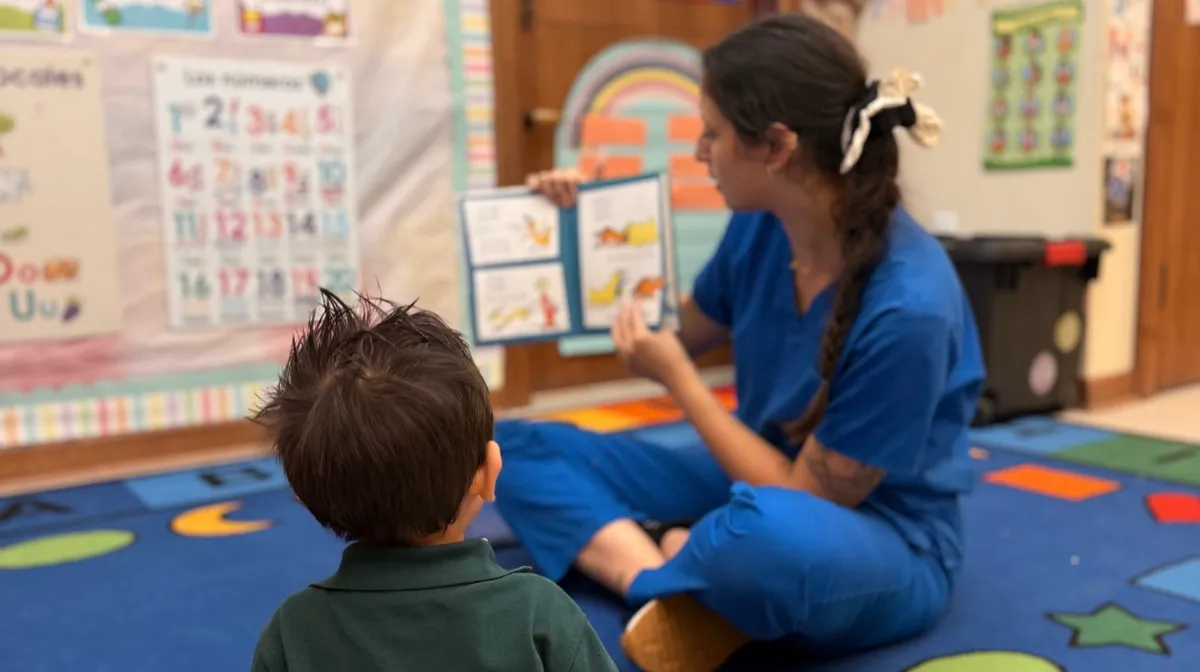
Picture books give young learners visual clues that help them understand unfamiliar words. As children grow, stories can introduce more complex language and encourage conversations about characters, feelings, and events.
Try asking questions such as "What do you see?" or "What do you think happens next?"
Allow your child time to respond, even if their answer is only a gesture or a single word.
Bilingual books can also create opportunities for children to explore vocabulary in more than one language.
Encourage Learning Through Play
Children are naturally curious, which makes play an important part of language learning.
Building blocks, pretend kitchens, puzzles, dolls, and outdoor games can all encourage communication.
During pretend cooking, for example, children can practice naming ingredients, requesting items, and describing what they are making.
Parents can introduce words naturally as the activity unfolds.
Hands-on educational materials, such as flashcards, matching activities, and age-appropriate activity books, can provide additional opportunities to explore vocabulary.
These resources work best when they encourage interaction rather than requiring children to sit quietly and memorize information.
Use Songs and Repetition
Songs introduce children to rhythm, pronunciation, and repeated language patterns.
A familiar song about numbers, colors, or body parts can help children recognize words through repetition.
Movements and gestures can make these experiences even more meaningful.
For example, a child singing a song about body parts can point to each body part as it is named.
Over time, children may begin participating independently, first through movements and eventually through words.
The key is to keep the experience enjoyable. Language learning should feel like something children can participate in, not something they are constantly being tested on.
Does Learning Two Languages Confuse Children?
One of the most common concerns parents have about bilingual language development is whether exposure to two languages will confuse their child.
Research does not support the idea that learning multiple languages causes language confusion or speech and language disorders.
Children who grow up hearing more than one language may occasionally combine words from different languages in the same sentence.
For example, a child learning English and Spanish might say, "I want agua."
This does not necessarily mean they are confused. They may simply be using the vocabulary they currently know to communicate their needs.
It is also normal for children to develop stronger skills in one language than another, especially if they hear or use one language more frequently.
Parents can support bilingual development by continuing to speak the languages they know best and giving children regular opportunities to use them.
How Long Does It Take for Kids to Learn a New Language?
There is no single timeline for how quickly children learn another language.
Language development depends on several factors, including a child's age, previous language experiences, frequency of exposure, opportunities to communicate, and individual learning needs.
Some children begin using familiar words relatively quickly, while others spend more time listening before speaking.
Learning basic vocabulary is also different from developing the ability to hold conversations, understand detailed stories, or read and write confidently.
Rather than focusing only on how many words a child can say, parents can pay attention to other signs of progress.
Does your child recognize familiar instructions? Do they respond to greetings? Are they beginning to understand songs or stories? Do they attempt to communicate, even with gestures or a combination of languages?
These experiences can all reflect growing language understanding.
Consistency is more valuable than rushing toward fluency. Short, meaningful interactions throughout the week can help children build familiarity and confidence over time.
Helping Your Child Build Language Confidence
Understanding how kids learn languages naturally can change the way we approach early language education.
Children do not need every interaction to become a formal lesson. They need opportunities to listen, explore, communicate, and feel comfortable making mistakes.
At Crossing Borders Learning Solutions, our approach to bilingual educational materials comes from years of experience with young learners in real classrooms. We believe language development should be supported through meaningful activities that encourage curiosity, participation, and confidence.
Whether your child is just beginning to recognize words or is ready to explore reading and writing in another language, the most important thing is to keep learning engaging and appropriate for their stage of development.
A conversation during breakfast, a favorite bedtime story, or a playful activity can become an opportunity to discover something new.
Language learning does not have to begin with a lesson. Sometimes, it begins with a simple conversation.
Explore our bilingual books, flashcards, and hands-on educational resources at Crossing Borders Learning Solutions to find activities that support your child's learning journey.
